About the ped-DTC Registry
Who Can Participate?
Were diagnosed with differentiated thyroid carcinoma
Were under 18 years of age at diagnosis
Are being treated or followed at a participating hospital (from 1 January 2020 onwards)
Discover How the Registry Works
What Data Is Collected?
Doctors securely enter important medical information that helps researchers understand how pediatric thyroid cancer develops and responds to treatment. The information collected may include:
Diagnosis and cancer type
Details about the specific form of thyroid cancer, how it was discovered, and any initial test results.
Treatments received
Information on surgery, radioactive iodine therapy, medication, and other forms of care, including timelines and outcomes.
Follow-up and long-term outcomes
Ongoing care information, such as check-ups, recurrence monitoring, hormone therapy, and overall health after treatment.
All information is stored in a secure European platform (EuRREB) and is fully de-identified.
This means: Your child’s name and personal identity are never shared, Data are stored under a coded number, Only approved medical researchers can use this information, and only for ethical studies
The goal is to learn from each child’s journey — safely, respectfully, and always under strict privacy rules.
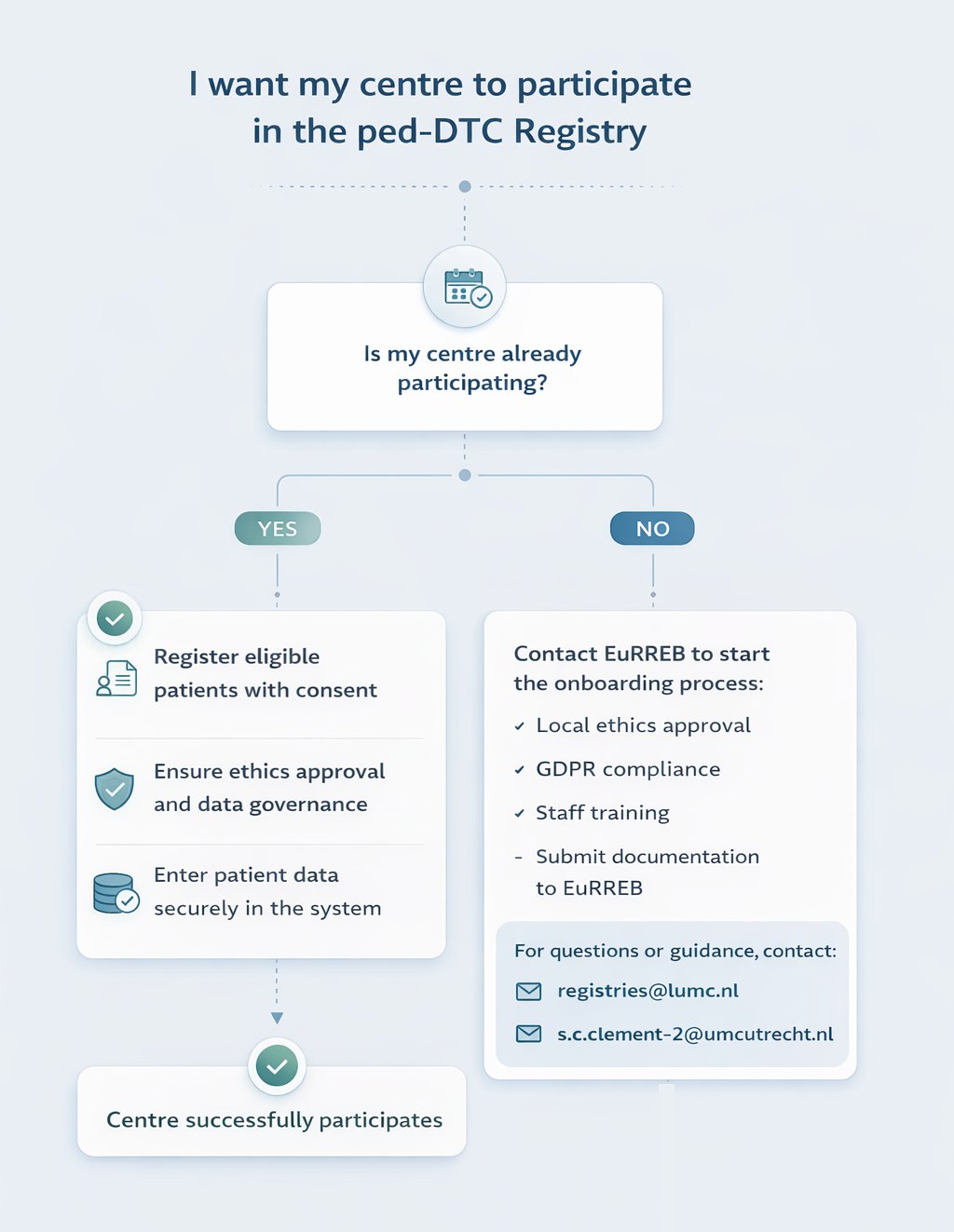
How participation works
Why participation matters
By joining the registry, families help to: